You think they’re negotiating the item.
They’re not.
They’re negotiating you.
Here’s exactly how the Pawn Stars playbook works — and how to beat it.
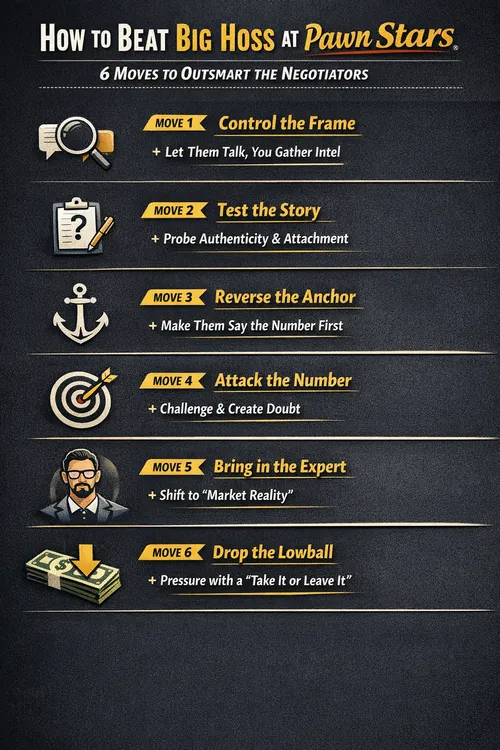
Move 1: Control the Frame Before They Do
What they say: “What do you got?”
What’s actually happening: Move 6 — Signal with Precision (Frame Control)
They’re letting you tell the story, anchor perceived value, and reveal what you think you have. They commit to nothing. You reveal everything.
You’re not there to pitch. You’re there to negotiate. Keep it tight. Don’t oversell. Don’t speculate on value.
Move 2: Protect Your Story — It Drives Value
What they say: “How did you get it?”
What’s actually happening: Move 2 — Run the Numbers (Information Extraction)
They’re testing provenance, authenticity risk, and emotional attachment. Weak story = weak leverage.
"If your story cracks, your price collapses."
Counter it: be clear, factual, and confident. Don’t guess. Don’t fill gaps with assumptions.
Move 3: Don’t Give Away the First Number
What they say: “What were you looking to get?”
What’s actually happening: Move 4 — Control the Opening (Reverse Anchor)
This is the trap. They force you to anchor first, define the range, and show your hand — while avoiding bidding against themselves.
Flip it back:
- “What are you seeing these go for?”
- “How would you value this?”
- “Where do you think this lands?”
Make them anchor. Whoever sets the first number sets the range. Don’t let that be you.
Move 4: Defend the Logic Behind Your Number
What they say: “How did you get that number?”
What’s actually happening: Move 2 + Move 3 — Anchor Attack + Strategy
Now they challenge your comps, question your assumptions, and introduce doubt. They’re not arguing. They’re eroding your confidence.
Use real comps. Use ranges, not guesses. Tie value to specifics. If your logic is weak, your number won’t hold.
Move 5: Recognize the Authority Play
What they do: Bring in an expert.
What’s actually happening: Move 3 — Strategy + Leverage (Authority Injection)
This shifts the game from your opinion vs. mine to market reality vs. your guess.
"Expect the expert. Prepare for the expert. If you don’t bring your own authority — data — you lose to theirs."
Move 6: Don’t Fall for the “Favor” Close
What they say: “Best I can do is $100… I’m taking a risk here.”
What’s actually happening: Move 5 — Control the Clock (Low Anchor + Pressure)
They package the offer with a low number, risk framing, and I’m helping you out language. This is not generosity. This is positioning.
The deal only works if you believe their frame. Don’t react emotionally. Re-anchor with your logic. Be willing to walk.
The Big Insight
They don’t negotiate the price.
They negotiate your confidence in the price.
Why This Matters Outside of Pawn Stars
This isn’t TV. The same playbook runs in:
- Salary negotiations → “How did you get that number?”
- Consulting deals → “That seems high…”
- Procurement → “We’ve got lower bids…”
Different setting. Same six moves. Same outcome — if you’re not prepared.
Final Take
Big Hoss isn’t buying your item.
He’s buying your lack of preparation.
Want to know which move in your negotiation breaks down under pressure?